By
By 
The urgent mission to eradicate poverty and the drive for universal digital connectivity are no longer parallel tracks in Nigeria. They are rapidly converging into a single, powerful strategy. This was the resounding theme at the 2025 IEEE Connecting the Unconnected (CTU) EMEA Summit. At the gathering, leaders declared that digital technology and data innovation are now non-negotiable tools for strengthening social protection. They are also now imperative to driving inclusive growth, and ensuring no Nigerian is left behind.
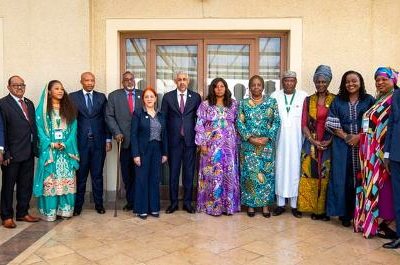
Held at Baze University, Abuja, under the theme “Connecting the Unconnected: Bridging Digital Frontiers,” the summit served as a critical action-planning session. It moved beyond theory to showcase how connectivity is directly being weaponized against poverty and exclusion.
Digital Identity: Making the Invisible Visible for Aid
In a powerful keynote, Professor Nentawe Goshwe Yilwatda, APC National Chairman and former Minister of Humanitarian Affairs, presented a data-driven case study on how digital governance is rewiring Nigeria’s social safety net.
He detailed how the integration of the National Social Register (NSR), National Identity Number (NIN), and Bank Verification Number (BVN) has created an auditable system covering over 70 million individuals. This technological backbone has drastically reduced fraud in cash transfer programs, ensuring aid reaches its intended vulnerable recipients.
“Engineering, data science, and digital governance are central to building a nation where no citizen is invisible, Within nine months, digital tools helped us verify the identity of Nigeria’s most vulnerable, eliminate corruption in cash transfers via digital payments, and predict disaster risks,” Yilwatda stated.
From Access to Empowerment: The Core Summit Mission
Officially opening the summit, Professor (Mrs.) Ifeyinwa Eucharia Achumba, Chair of the IEEE Nigeria Section, framed connectivity as a fundamental right and economic catalyst.
“This summit is a call to move from ideas to action. Let us work together to build a digital future where no community is left behind,” she declared, setting a tone of urgent collaboration echoed by regulators from the NCC, NITDA, and USPF.
A Vital Warning: Secure the Bridge to Trust
As the drive to connect accelerates, a critical caution was sounded. Mr. Rex Mafiana, MD/CEO of FPG Tech & Solutions, warned that expanding access without security could backfire. “Connectivity without cybersecurity turns access into exposure. Without trust, inclusion cannot exist,” he asserted. He advocated for Security by Design principles to protect new, often vulnerable, digital users from exploitation.
Blueprinting an Inclusive Digital Future
The summit’s eight strategic tracks and panel sessions focused on building the tangible pathways to connect and empower. Key discussions included:
- Innovative Infrastructure for Universal Connectivity: Led by Jane Egerton-Idehen of NIGCOMSAT, exploring satellite and community network solutions for remote and underserved areas.
- Policy & Financing for Inclusion: Chaired by Dr. Femi Adeluyi of NITDA, which dissected regulatory reforms needed to make access affordable for all, recognizing that closing the digital gap is foundational to closing the poverty gap.
The summit concluded with a unified resolve: achieving universal connectivity is not a mere technical goal. But it is now a prerequisite for equitable development. By leveraging data for social good, securing digital pathways, and prioritizing the unconnected, Nigeria is charting a course where technology becomes a true lifeline for millions, transforming them from subjects of poverty to active participants in the digital economy.