By
By 
By Samuel Zalanga

I am writing this to express my feelings and observation on something that is giving me great concern. I can apply this reflection to different contexts in the global community but for the sake of time and being focused, I will focus on Africa and many things that are unfolding as realities in Nigeria. While there is variation across African countries, there are also things that many countries in the continent share in terms of experience and realities.
Understanding the Role of Religion and Spirituality
One cannot understand the African society deeply and effectively engage it without understanding the role of religion and spirituality. From an anthropological point of view, all societies went through such experience but changed as they evolved through the process of development. Research, however, shows that the most religious societies or countries in the world are also the most unequal. There are important reasons that explain why such societies need religion more than others. Think about that.
Here I want to focus on something I have noticed in many African countries, but particularly, Nigeria. Whether in the mainstream of the society or religious circles, there is very little serious discussion about justice, and where there is reference to it, the discussion does not go deep. Many people do not know that the word “justice” does not mean the same thing for all people. There are different approaches to and conceptions of what justice is.
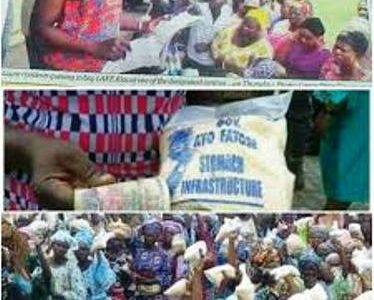
What is often discussed in most African countries is charity instead of justice. People want the rich and privileged to be charitable. There is nothing wrong with asking people to be charitable or demanding that all of us humans should be charitable to each other.
But charity should never replace justice. Given that there is little or no discussion of justice, I want to share some thoughts and insights that I have reflected on in respect of the limitations or problems with charity after doing some readings and engaging in careful observations as a participant observer.
What is Wrong with Charity?
There are times of celebrations in various religious traditions where people become very charitable. Some people do not think more deeply about anything more than charity and even in that case, this is mostly done during the special times of religious celebrations such as Christmas, which is approaching soon for Christians.
But most, if not all religious traditions require charity as part of their religious obligations, moral and ethical conduct. Good as it is, however, there are certain things that may be wrong or can go wrong with charity depending on context and certain specificities.
Some, scholars have asserted after careful research and documentation that charity tends to be personal and even fickle in nature. If charity is the main strategy that a society relies upon to help those that are socially marginalized, disadvantaged, and struggling in life, then the problem is that whether charity takes place or not is a personal decision of the benevolent person.
Furthermore, because it is personal, its continuation and the criteria that are used to determine who gets the charity changes based on the whim and caprice of the person who gives the charity. It is because of this reason that while charity is good, it is not a sustainable strategy to cater for those that are in need.
Politicians as “feudal lords” with “serfs,” as dependants
Second, there is an implicit assumption and expectation that with charity, what the weak, poor, and socially marginalized people in society get depends on the will and disposition of the rich and powerful. This has implications for democracy in many developing countries such as Nigeria.
Indeed, there is evidence to support the fact that many politicians never want the people they represent to be self-reliant and self-sustaining because if that happens, the politicians will have little control over the lives of the people in their constituencies.
Many of the politicians prefer to act like “feudal lords” where the “serfs,” metaphorically speaking are always dependent on them. In effect, there is a vested interest among many of the ruling elites to keep many of the people in a relatively desperate or dependent situation so that they will always go to the politicians and beg for certain favors.
Scholars in the area of social exchange theory have long asserted that when “giving” is consistently one way or in one direction, there is a power dynamic that develops between the giver and the receiver. This can have broader ramifications for social relations and the way and manner political institutions operate in a society or community.
This kind of political practice discourages the political elites from focusing on creating ways that the problems of socially marginalized people can be addressed through public and social policies that attend to the needs of all citizens. When this kind of practice where the majority of the population is compelled by circumstances to be dependent on the politicians, the people essentially internalize that way of thinking and it becomes like a way of life or the culture of poverty as one scholar called it.
Elites need as much social liberation as ordinary citizens
For this kind of system to change, the elites and privileged people need as much social liberation as the ordinary citizens. The elites’ sense of self is contingent on the existence of the disadvantaged or struggling citizens that are dependent on them.
There is a need to create a different kind of society where the elites feel deeply satisfied not by acting as quasi-feudal lords, but as agents for fully empowering the ordinary citizens to be self-reliant and self-sustaining. In this context, the problem of underdevelopment becomes an integral part of the state of mind of the elites and the masses.
Another problem with charity is that it is subject to the vagaries of short-term funding, which may be politically determined. In effect, there is no guaranteed sustainability. When the only strategies for helping the masses or socially marginalized people is charity instead of established and institutionalized public and social policies aimed at attending to all citizens, how the masses get attended to and what they get is contingent on the political whim and caprice of political elites. It also depends on the dynamics of the system such as who is in charge and how they feel based on certain calculations in pursuit of their social and material interests.
Charity substitutes for dignifying standards for common social welfare
Building on that, another major problem with charity is that it is not about complementing; rather, it attempts to substitute for concerted social, economic, and political commitment, and social action committed to institutionalizing solid and dignifying standards for the common social welfare of all citizens in the society, without discriminating against others based on ethnicity (‘tribe), religion, gender, state of origin, family background etc.
In effect while charity is good, it is not the same thing as being committed to justice for all people in a society. What we are seeing in many countries now is the attempt to abandon systematically institutionalized approaches to attend to the needs of all citizens but especially those that are in least advantaged categories. Given the relatively great progress that was made in the past in attending to the needs of socially disadvantaged people (e.g., the welfare state), we are today moving backwards or regressing in terms of the commitment and effort to promote the human development of all people.
Finally, when all that society relies upon to address the needs and welfare of all but especially the socially disadvantaged is charity, there is the danger of personal morality agendas becoming secretly infused into the charity program and process while they remain unexposed to public scrutiny, debate, and examination. In effect, the welfare of people who are disadvantaged by certain circumstances becomes an issue that is contingent on whatever is the personal morality and disposition of those at the helm of affairs