By
By 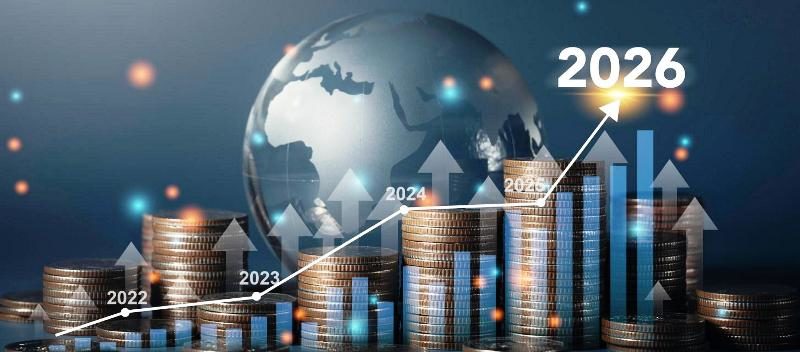
Africa’s economic outlook is set for a modest improvement, with growth projected to rise to 4.0% in 2026, according to the UN’s flagship World Economic Situation and Prospects 2026 (WESP 2026) report.
Launched by the Economic Commission for Africa (ECA) in Addis Ababa, the report notes an acceleration from 3.5% in 2024, driven by greater macroeconomic stability in several large economies. However, high debt, limited fiscal space, and volatile commodity prices continue to pose significant risks.
Uneven Growth Across Subregions
The recovery remains uneven across the continent. East Africa is expected to lead regional performance, with growth accelerating to 5.8% in 2026, fueled by robust activity in Ethiopia and Kenya. North Africa’s growth is forecast at 4.1%, while West Africa is projected to expand by 4.4%, supported by reforms in Nigeria.
Central and Southern Africa will see more subdued growth, at 3.0% and 2.0% respectively, due to structural constraints and exposure to external shocks.
“Africa’s growth recovery remains uneven across subregions,” said Hopestone Chavula of the ECA.
Persistent Challenges: Debt, Inflation, and Trade Shocks
Key challenges threaten inclusive growth. Africa’s average public debt-to-GDP ratio remains high at 63%, with interest payments consuming nearly 15% of government revenues. Approximately 40% of African countries are in or at high risk of debt distress.
While inflation has eased in most economies, food price inflation remains above 10% in many nations due to structural vulnerabilities and climate shocks. Trade rebounded in 2025, but the expiration of the African Growth and Opportunity Act (AGOA) and slow implementation of the African Continental Free Trade Area (AfCFTA) present ongoing challenges.
A Call for Renewed Multilateral Action
The report underscores the need for deeper global coordination amidst rising geopolitical tensions and inward-looking policies. It highlights the Sevilla Commitment as a blueprint for reforming the international financial architecture and scaling up development finance.
“A combination of economic, geopolitical and technological tensions is reshaping the global landscape,” said UN Secretary-General António Guterres, noting that progress toward the Sustainable Development Goals (SDGs) remains distant for many developing economies.