By
By 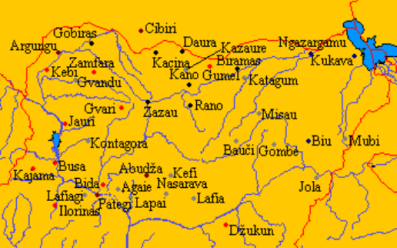
By Oladejo Raphael
A growing debate is stirring intense conversations across Northern Nigeria, as questions emerge over the intersection of religion, ethnicity, and political power in Hausaland.
At the heart of the controversy is a critical reflection on whether Islamic identity has been deliberately fused with Hausa ethnicity for political purposes — and why such a standard appears inconsistently applied across ethnic lines.
The argument being advanced by some commentators is clear: ethnicity and religion are historically distinct. Long before the advent of Islam in the 7th century, ethnic identities such as the Hausa, Arabs, Jews, and Copts already existed. The rise of Islam under Prophet Muhammad did not erase tribal or ethnic identities in Arabia. Figures such as Abu
Jahl and Abu Lahab, who rejected Islam, remained Arabs despite their religious stance.
Likewise, early Muslim leaders such as Abu Bakr and Uthman did not cease to be Arabs upon embracing Islam.
If Islam Didn’t Redefine Arab Identity, Why Should It Define Hausa Identity?
Critics now ask: if Islam did not redefine Arab ethnicity, on what historical or logical grounds should Hausa identity be conditioned on Islamic faith?
The debate intensifies when comparisons are drawn with Fulani identity. Across West Africa, Fulani communities include Muslims, Christians, traditionalists, and groups such as the Wodaabe, yet their ethnic identity remains intact regardless of religious affiliation. No formal religious condition is attached to being Fulani.
Why then, critics ask, should Hausa identity be treated differently?
Some analysts argue that redefining Hausa identity as exclusively Islamic may serve strategic political purposes. By merging ethnic legitimacy with religious conformity, political elites could potentially consolidate authority, frame dissent as religious rebellion, and stigmatize critics through labels that question their faith rather than address their arguments.
Those raising these concerns insist that the Hausa people historically embraced Islam voluntarily and with devotion, not as an imposed ethnic prerequisite but as a matter of faith. They contend that religious devotion and political authority must remain distinct to prevent manipulation.
Does It Point to God—or to Power?
The broader implication of the debate touches on national cohesion. In a country as diverse as Nigeria, where religion and ethnicity frequently intersect in governance and electoral politics, critics warn that conflating the two may deepen divisions rather than strengthen unity.
Supporters of a religiously defined identity argue that Islam has shaped Hausa culture for centuries and is inseparable from its social framework. Opponents counter that cultural influence does not equate to ethnic exclusivity.
As the conversation unfolds, one central question remains unresolved: Is religion being used as a spiritual compass, or as a political instrument?
The answer may shape the future of identity politics in Northern Nigeria.
First published in Urgent2k (The official Facebook page of Oladejo Raphael)