By
By 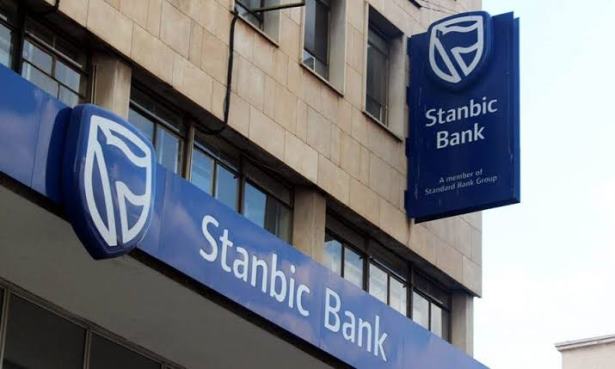
Rating agency cites robust asset quality, improved liquidity, and backing from Standard Bank Group as Stanbic IBTC maintains top-tier national ratings.
GCR Ratings (GCR) has affirmed Stanbic IBTC Bank Limited’s national scale long and short-term issuer ratings of AAA(NG) and A1+(NG), respectively, with a stable outlook, the rating agency announced in its latest action.
The ratings continue to reflect the strengths and weaknesses of Stanbic IBTC Holdings Plc, given the bank’s position as the core operating entity within the group. According to GCR, Stanbic IBTC Bank accounts for 96.3% of total assets and 79.1% of revenue as of 31 December 2025.
Key Drivers Behind the Rating
Ratings analysts said the overall ratings benefit from a sound competitive position, good asset quality, a stable funding structure, an adequate liquidity position, and improved capitalisation.
The ratings are also bolstered by robust financial and technical support from the ultimate parent, Standard Bank Group, one of the largest banking groups in Africa by balance sheet size and earnings.
Stanbic IBTC Holdings is one of the largest financial services groups in Nigeria, with a strong presence across commercial banking, investment banking, asset management, pension management, custodian services, insurance, fintech, and stockbroking.
Strong Growth and Market Position
Stanbic IBTC Bank is a top-tier two bank in Nigeria and has maintained a strong growth trajectory, with total assets increasing by 24.0% to ₦8.3 trillion (USD 5.8 billion) as of 31 December 2025, representing approximately 4% market share.
The group maintains a strong portfolio of non-bank subsidiaries, including the largest pension and non-pension fund managers in Nigeria, which continues to support earnings, product diversification, and cross-selling opportunities.
Impressive Profitability Metrics
Operating revenue and profitability remain robust, underpinned by stable earnings contribution from both banking and non-bank operations as well as ongoing operating efficiency initiatives.
The group’s return on average equity (ROAE) and return on adjusted assets (ROAA) stand at 44.8% and 3.6%, respectively, as of 31 December 2025, compared with 40.9% and 2.5% in 2024, comparing favourably with peers.
Capitalisation Continues to Strengthen
Capitalisation improved during the review period, driven by good earnings retention and additional equity injection to fully comply with new capital requirements.
The GCR core capital ratio strengthened to 16.9% in December 2025 (from 14.7% in December 2024) and further improved to 22.8% as of 31 March 2026, driven by a reduction in risk-weighted assets.
Additionally, the bank’s regulatory capital adequacy ratio has been consistently maintained above the regulatory minimum of 10% for its licence category.
Looking ahead, rating analysts expect the GCR core capital ratio to remain around 18.0% to 20.0% over the next 12 to 18 months, underpinned by sustained earnings retention and cautious loan book growth.
Asset Quality Beats Industry Average
Stanbic IBTC Bank’s risk position remains stable, with asset quality metrics better than industry average. As of 31 March 2026, non-performing loans (NPL) and credit losses ratios registered at 3.1% and 0.5%, respectively, well below the industry average of approximately 8% and 3.5%.
Loan loss reserve coverage of Stage 3 loans has averaged 115.2% over the past five years, implying that future earnings are protected from unexpected losses that could stem from low provisioning.
However, obligor concentration remains high, with the top twenty obligors accounting for 45.6% of gross loans in December 2025, up from 44.3% in 2024. Foreign currency (FCY) loans to gross loans registered at 40.1% in December 2025, an increase from 37.0% in 2024, remaining within the bank’s internal limit.
Stable Funding and Strong Liquidity
The group’s funding and liquidity position is positive to the ratings, underpinned by a stable funding base and liquid balance sheet. The group is largely funded by customer deposits, which have averaged 60.0% of the funding base for the past five years (2021–2025).
As of March 2026, customer deposits declined by 6.4% to ₦4.1 trillion, driven by deliberate efforts to reduce reliance on expensive deposits to support lower funding costs. Consequently, the proportion of current and savings accounts (CASA) deposits to the deposit pool increased to 71.5% as of 31 March 2026, from 62.6% in 2025, while the cost of funds was lower at 3.7%, down from 4.4%.
With GCR liquid assets coverage of customer deposits and wholesale funding improving to 75.5% and 6.4x, respectively, as of 31 March 2026, rating analysts affirmed that Stanbic IBTC’s liquidity remains sound. GCR expects funding and liquidity to remain strong over the next 12 to 18 months.
Parental Support Bolsters Ratings
Stanbic IBTC Bank’s national scale issuer ratings benefit from parental support.
While Stanbic IBTC accounts for less than 10% of Standard Bank Group’s assets and revenue, it receives tangible support and operates in close assimilation with its parent.
According to GCR, Standard Bank Group possesses the financial strength to back both the group and the bank.
Stable Outlook Ahead
The stable outlook reflects the expectation that the group’s financial profile will remain sound, with asset quality metrics contained and below the industry average.
GCR expects the GCR core capital ratio to range between 18.0% and 20.0%, adding that the funding and liquidity position is expected to remain stable, predicated on good deposit mobilisation capacity as well as other funding options.