By
By 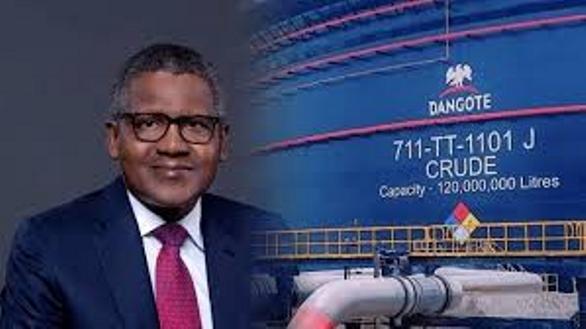
EBC Financial Group examines potential impact of USD 40 billion valuation on NGX and investor landscape. Group notes its reported valuation and USD5 billion fundraising target may raise questions of price justification, public access to shares and whether new capital will enter Nigeria’s equity market.
A Potential Market-Defining Moment
Dangote Petroleum Refinery could become an unusually large part of Nigeria’s stock market if its eventual IPO valuation approaches the roughly USD 40 billion implied by a recent private placement. EBC Financial Group (EBC) highlights that this would value the refinery at about N54.63 trillion, using the Central Bank of Nigeria (CBN) Nigerian Foreign Exchange Market rate of N1,365.6856 per USD on 7 August.
Against the N158.513 trillion value of companies listed on the Nigerian Exchange (NGX) on the same date, adding the refinery at that value would produce a market worth about N213.14 trillion, with Dangote Refinery accounting for 25.6% of the total. This scenario assumes the full USD 40 billion equity value is reflected in NGX market capitalisation and other listed company values remain unchanged.
The Valuation Question: Private Price vs. Public Reality
Based on the private transaction, USD 40 billion provides an indication of Dangote Refinery’s value, but it does not establish the eventual IPO price. Details published on 4 August said a USD 2.5 billion private placement for a 6% stake implied a valuation of roughly USD 40 billion. The proposed initial public offering (IPO) was reported to target about USD 5 billion, while the eventual IPO valuation and percentage offered to the public were not disclosed.
This distinction is critical. A private transaction may produce a different valuation from the price a broad group of public investors is prepared to accept. For context, public equity market values cited alongside the transaction were about USD 12 billion for Türkiye’s Tupras and USD 16 billion for US-listed HF Sinclair. The Dangote figure is about 3.3 times Tupras and 2.5 times HF Sinclair.
While these are not direct comparisons because profitability, debt, operations and growth plans differ, the gap nevertheless increases the need for audited earnings, cash flow, debt and investment plans that explain what supports the higher valuation.
Market Impact: A Quarter of the NGX
At its proposed size, movements in the company could become highly visible across the Nigerian equity market. The reported USD 5 billion fundraising target is equivalent to about N6.83 trillion at the 7 August exchange rate, or approximately 4.3% of the N158.513 trillion existing NGX market value.
If new Nigerian or foreign money funds the offer, the pool of capital invested in Nigerian equities could expand. However, if investors sell current holdings to participate, capital could instead move away from other listed companies. Its actual influence on NGX indices may also depend on the shares available for public trading and the relevant index rules.
The Free Float Factor: How Much Can Investors Actually Trade?
NGX rules show why total company value does not tell investors how much stock they can actually trade. Main Board companies can qualify through either 20% public ownership held by at least 300 shareholders or publicly tradable shares worth at least N20 billion. The Premium Board value alternative is N40 billion.
Holdings controlled by promoters, directors and close relatives, government, or strategic investors owning at least 5% are excluded from qualifying public shares. This means a company worth tens of trillions of naira could still have a much smaller amount of stock available for regular trading if ownership remains concentrated. The key issue is therefore how much of Dangote Refinery becomes accessible to public investors and how widely those shares are held.
Regional Investment and African Capital Flows
Regional investment could also affect the outcome. Details published on 4 August indicated engagement involving South Africa, Kenya, Egypt, Ghana and Rwanda, including possible Kenyan participation of up to USD 500 million, although no allocations were confirmed.
The Johannesburg Stock Exchange separately said Dangote Group had shown strong intent to pursue a South African listing after Nigeria. Regional participation in the Nigerian offer could bring new capital directly into Nigerian equities. A later South African listing could broaden access but would not itself increase money raised through the Nigerian IPO.
Pension Funds and the Capital Allocation Challenge
Pension funds face the same question of capital allocation. The National Pension Commission (PenCom) waived the usual existence, profitability and dividend requirements so Pension Fund Administrators can consider the IPO, while retaining internal investment policies, risk-management requirements and duties to contributors and retirees. PenCom states that the dispensation is exceptional, one-off and specific to this proposed IPO.
Pension funds held N5.907 trillion in domestic ordinary shares at the end of June, compared with the offer’s approximately N6.83 trillion equivalent. This does not imply pension funds would finance the offer. It shows why managers must consider exposure to one company and whether participation requires reducing other investments.
What Investors Need Before Committing
An approved prospectus should clarify the valuation, shares offered, public ownership and use of proceeds. The Securities and Exchange Commission (SEC) said on 23 June that no IPO application had then been filed or approved and ordered unauthorised pre-marketing to stop. Details published on 4 August later said an IPO application had been submitted, with regulatory approval expected in the following weeks.
Until final terms are disclosed, the test for Nigeria is whether the listing combines a supportable valuation with broad public ownership and genuinely additional investment.
Dangote Refinery could account for 1/4 of NGX market value
David Precious, Senior Market Analyst at EBC Financial Group, said: “If Dangote Refinery entered the Nigerian Exchange at close to a USD 40 billion valuation, it could account for roughly one-quarter of the resulting NGX market value. If that valuation is difficult to support, few shares are available for public trading, or investors need to reduce other Nigerian holdings to participate, the effects could extend across Nigeria’s equity market, including existing NGX-listed companies and their shareholders.”
Precious added:
“Dangote being listed could become a turning point for Nigeria’s equity market if it brings wider public ownership and additional African capital. Investors still need clear evidence supporting the valuation, clarity on how much of the company they can trade and an explanation of where the money raised will go. Those answers will determine whether the listing expands the Nigerian equity market or concentrates more investment around one company.”