By
By 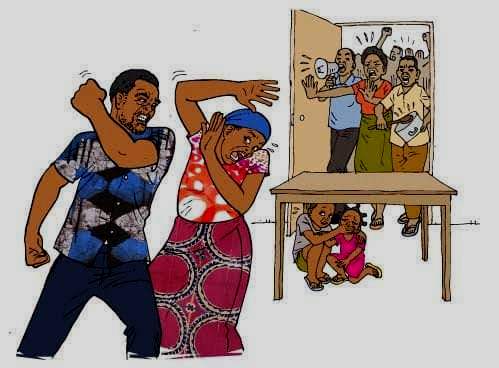
By Joy Akunwa Nwajari
Every year, on November 25th, the world marks the International Day for the Elimination of Violence Against Women. Yet, in Nigeria, the reality of gender based violence stretches far beyond a single day of recognition. It sinks into the quiet spaces of everyday life.
It hides behind the polite smile someone faces on their way to work, the soft reply of “I’m fine,” and the familiar warning to “just manage.” It is the silent weight carried by women, men, boys, and girls who endure pain in places that should bring them peace.
Unreported, Unseen: The Silent Crisis of Domestic Violence
Every day, people walk past a kind of violence that rarely makes the news. It takes place in living rooms, bedrooms, compounds, and even in relationships that appear perfect from the outside. A neighbour, male or female begins to move differently or avoids eye contact. A girl suddenly stops going to school because “something happened at home.”
A boy grows silent after constant shouting or beatings. A woman hides bruises beneath long sleeves. A man feels overwhelmed by emotional or financial pressure but swallows his pain because he believes he must “be strong.”
These are not distant stories; they are the people we greet daily, the people who laugh with us, the people who sit beside us in church, at work, or on the bus. And every time we look away, we pretend that silence is the same thing as peace.
But silence has never produced peace. It simply teaches suffering how to hide.
No One is Immune: The Far-Reaching Impact of Gender-Based Violence
Gender based violence affects everyone, and the numbers prove it. According to national surveys, one in three Nigerian women has experienced physical or sexual violence in her lifetime. Research also shows that one in ten Nigerian men has experienced emotional or physical abuse, though many never speak out due to shame and cultural expectations.
And according to the National Human Rights Commission, more than 25,000 gender based violence cases have been officially recorded between 2020-2022, yet these numbers represent only a fraction of the reality, as countless survivors remain silent. Statistics reveal the size of the problem, but lived experiences reveal its depth.
When Fear and Tension Become Domestic Norms
I have come to understand that when fear becomes a normal part of a household, something foundational collapses. Once trust is lost, peace cannot survive.
A home where anyone man, woman, or child lives in fear cannot create a peaceful society. Violence inside the home does not stay inside the home; it travels. It travels into schools, workplaces, communities, and even into the next generation. Violence that begins in private spaces eventually shapes public spaces. It influences how children interact with others, how adults solve conflict, and how society responds to stress. In many cases, the home is where violence learns to walk.
When people experience constant tension, emotional pressure, or disrespect, the results show up in their behaviour. People carry emotional burdens that no one sees. A man weighed down by stress may lash out simply because he has nowhere safe to place his frustration.
A woman carrying too many responsibilities may break slowly, quietly, with no one noticing. Boys and girls who witness violence may grow up believing that pain is a normal language of love. Couples who once cared deeply for each other may slowly lose themselves to exhaustion, silence, and emotional distance. When stress meets silence, violence finds a doorway.
National Stability Begins with Safe Homes
Peace is not the absence of gunshots; it is the presence of safety, dignity, kindness, and respect. Peace shatters the moment a woman becomes afraid to speak. Peace shatters when a man cannot express his hurt without ridicule. Peace shatters when a girl walks through the world expecting danger. Peace shatters when boys learn that strength means suppressing their own humanity. A nation cannot claim stability if its homes are not safe.
Gender based violence appears in subtle, everyday ways: a partner checking a woman’s phone obsessively and calling it “love”; a man being mocked, insulted, or controlled but told to “be a man”; a girl touched inappropriately in public; a boy shouted into silence; a woman forced to hand over her earnings; a man physically harmed but too embarrassed to report it. These small wounds, repeated across thousands of homes, slowly weaken the emotional foundation of a nation.
The path forward requires honesty and courage. Nigeria needs support systems that protect everyone! Women, men, boys, and girls with safe, trusted ways to seek help. Children must learn emotional intelligence early, so boys understand that expressing feelings is not weakness and girls understand that boundaries and dignity are their right.
Men and women must be encouraged to seek counselling without shame. Harmful gender expectations must be challenged wherever they appear. Communities must stop looking away, because silence often fuels danger. And gender based violence laws must be enforced consistently and transparently, so protection is not just written on paper but lived in practice.
The Illusion of Justice: When Laws Exist Without Enforcement
Nigeria is not without laws, but laws mean little when they are not enforced. The Child Rights Act (2003) guarantees the protection of every Nigerian child from all forms of violence, abuse, and neglect. The Violence Against Persons (Prohibition) Act (2015) outlaws physical, emotional, psychological, and economic abuse, yet many states have been slow to implement it fully. Some states, like Lagos, Ekiti, and Enugu, have domestic violence laws, but gaps remain in enforcement, funding, awareness, and accessibility. Laws on their own cannot save lives; only the courage to enforce them can.
True peace begins at home. Until Nigerian homes become places of safety, the nation will continue to struggle with hidden instability. Gender based violence harms women deeply, but it also harms men, boys, girls, families, and the country’s future. A generation cannot grow strong if children are raised in fear. A nation cannot be stable if its households are unsafe. Gender based violence is not a side issue; it is a national warning.
Charting the Path Forward: Ending Domestic Violence
For the government, I believe the path forward must include full implementation of the Child Rights Act and the VAPP Act across all states, proper funding of shelters, faster prosecution of offenders, and nationwide awareness campaigns that reach rural communities.
For communities, the responsibility lies in breaking the culture of silence, normalizing early reporting, supporting survivors without judgement, and refusing to protect abusers in the name of tradition and religion.
For individuals, the work begins with unlearning harmful beliefs and practices, seeking help before anger becomes violence, respecting boundaries, raising emotionally healthy children, and choosing empathy over silence.
Until we all confront this problem boldly and honestly, the peace we speak of will remain fragile, a quiet silence covering wounds too deep to ignore.
By Joy Akunwa Nwajari. NYSC Corp Member, Serving with the Institute for Peace and Conflict Resolution (IPCR) Abuja, Nigeria.