By
By 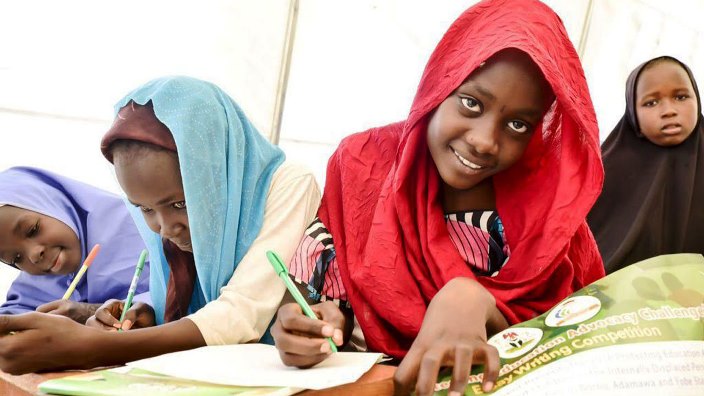
By Hapsatu Hamidu Mohammed
The acclaimed Ghanaian scholar, Dr. James Emmanuel Kwegyir-Aggrey, famously stated that “when you educate a man, you educate an individual, but when you educate a woman, you educate a nation.” This underscores the transformative role of women’s education, as educated women contribute not only to personal development but also to the welfare of their families, communities, and the nation.
Girl-child education is essential for breaking the cycle of poverty and achieving sustainable development. United Nations International Children’s Fund (UNICEF) emphasizes that education provides children with dignity, opportunity, and a better future, and remains a fundamental human right and a foundation for a strong and resilient society.
Functional education system must equip learners with life skills, critical thinking
A functional education system must therefore be all-inclusive, safe, and empowering, equipping learners with life skills, critical thinking, and the competencies required for meaningful participation in society.
The importance of educating the girl-child is reflected in the achievements of prominent women in African and Northern Nigerian history. Figures such as Queen Amina of Zazzau and Magajiya Daurama demonstrated early female leadership and influence. In more recent history, women such as Ladi Kwali, Gambo Sawaba, and Nana Asma’u Danfodio exemplified intellectual, cultural, and political contributions that shaped society.
Contemporary figures, including Amina J. Mohammed (Deputy Secretary General of the United Nations), Prof. Zainab Alkali (first female novelist in the north), Dr. Zainab Shinkafi-Bagudu (a global cancer advocate), Prof Laraba Abdullahi (the first female Vice-Chancellor from Northern Nigeria and first female VC of the University of Abuja) and many others, further demonstrate how education empowers women to attain leadership positions and global recognition. These confirm that investing in girl-child education benefits individuals, families, and society at large.
Despite its importance, girl-child education in Northern Nigeria faces persistent challenges rooted in socio-economic, cultural, and security-related factors. According to UNICEF, Nigeria has one of the highest numbers of out-of-school children globally.
Over five million out-of-school female children in Northern Nigeria are out of school
An estimated 18.3 million out-of-school children, with approximately 7.6 million girls. A significant proportion, around 5 million girls, are in Northern Nigeria, where 48% of the girls are in the North-East and North-West, which record the lowest female enrolment and completion rates, highlighting a persistent gender gap in access to education.
Poverty remains a major barrier. Many households cannot afford educational expenses and often prioritize boys’ education over girls’. Consequently, girls are frequently assigned domestic responsibilities or economic activities instead of schooling. This reinforces cycles of poverty and inequality and limits long-term opportunities for development.
Insecurity + Poverty worsened educational access in Northern Nigeria
Insecurity has further worsened educational access in Northern Nigeria. Armed groups have repeatedly attacked schools and abducted students. The abduction of 276 schoolgirls from Government Girls Secondary School, Chibok, Borno State in 2014 remains one of the most significant cases, with 82 girls still unaccounted for as of 2024.
In 2018, 110 girls were abducted from Government Girls’ Science and Technical College, Dapchi, Yobe State, with 104 later released. In 2021, 279 girls were kidnapped from Government Girls’ Secondary School, Jangebe, Zamfara State, and all the abducted schoolgirls were released.
More recently, in 2025, 25 girls were abducted from Government Girls’ Secondary School, Maga, Kebbi State, with 24 later released after one escaped. These incidents have increased fear among parents, led to school closures, disrupted learning, and discouraged many families from sending their daughters to school.
“Girls are married off before completing basic education, denying them opportunities for economic advancement”
Early marriage also continues to limit girls’ education. Many girls are married off before completing basic education, denying them opportunities for personal and economic advancement while exposing them to health risks associated with early pregnancy and childbirth. This practice significantly reduces female participation in education and economic activities.
Harmful traditional practices such as female genital mutilation (FGM) and other forms of gender discrimination further hinder girls’ education. These practices negatively affect health and well-being, often resulting in absenteeism or dropout. Although awareness campaigns have reduced their prevalence in some areas, they persist in certain communities.
Inadequate school infrastructure and poor sanitation also hinder girl-child participation in education. Many schools lack clean water, proper toilets, and hygiene facilities. These deficiencies create an unsafe and uncomfortable learning environment, particularly for adolescent girls, leading to frequent absenteeism and reduced academic performance.
“Despite challenges, girl-child education offers significant benefits”
Despite these challenges, girl-child education offers significant benefits. Educated girls are more likely to participate in economic activities, secure employment, and contribute to household income. This reduces poverty and improves living standards.
Education also promotes civic responsibility, critical thinking, and resistance to harmful ideologies, thereby strengthening peace and social stability.
Furthermore, educated women play a crucial role in improving health outcomes. They are better informed about nutrition, healthcare, and family planning, which reduces maternal and child mortality. Educated mothers are also more likely to ensure their children are educated, creating a positive intergenerational cycle of development.
Girl-child education in Northern Nigeria requires sustained intervention
The prospects for girl-child education in Northern Nigeria remain promising but require sustained intervention. Achieving Sustainable Development Goals (SDGs), particularly Goal 4 (Quality Education) and Goal 5 (Gender Equality), depends on addressing barriers such as poverty, insecurity, early marriage, and harmful cultural practices.
Government and non-governmental efforts must be strengthened through targeted policies, including scholarships for girls, improved school infrastructure, safe learning environments, and community sensitization. Compulsory education policies should be enforced, and legal frameworks such as the Child Rights Act (2003) must be fully implemented to protect girls’ rights to education.
Additionally, community-based early warning and early response mechanisms should be strengthened through collaboration with traditional and religious leaders. These stakeholders play a critical role in sensitizing communities and preventing attacks on educational institutions, thereby ensuring safer learning environments for the girl-child.
In conclusion, girl-child education in Northern Nigeria remains both a critical challenge and a major opportunity for national development. While significant barriers exist, coordinated efforts by government, communities, and development partners can ensure that every girl has access to quality education, ultimately contributing to a more equitable, peaceful, and prosperous society.
Hapsatu Hamidu Mohammed is a Research Fellow with Institute for Peace and Conflict Resolution,(IPCR). Abuja, Nigeria. [email protected]